

TWS Technology Outlines BESS Strategies for Exporters Facing Vietnam's Restructured TOU Tariffs

The official Decision No. 963/QD-BCT issued by the Vietnamese Ministry of Industry and Trade (MoIT)
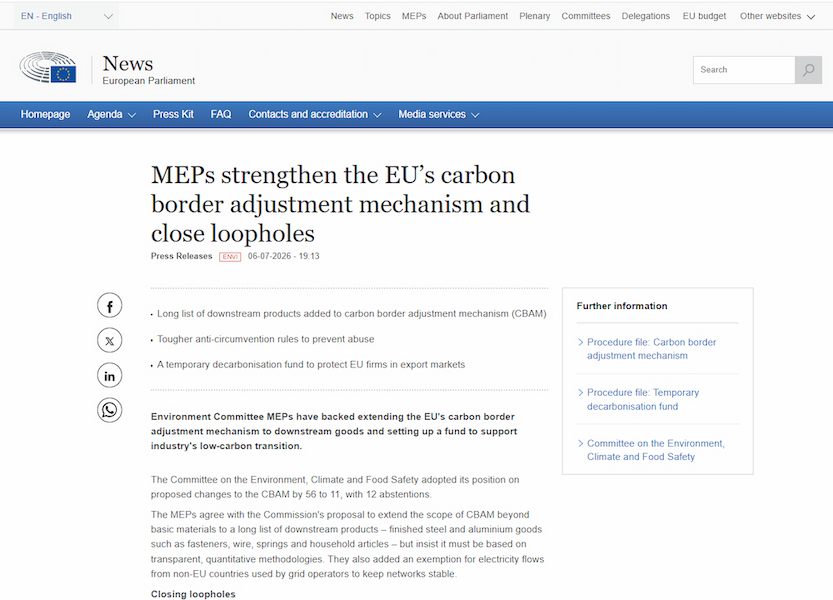
Official press release from the European Parliament on July 6, 2026
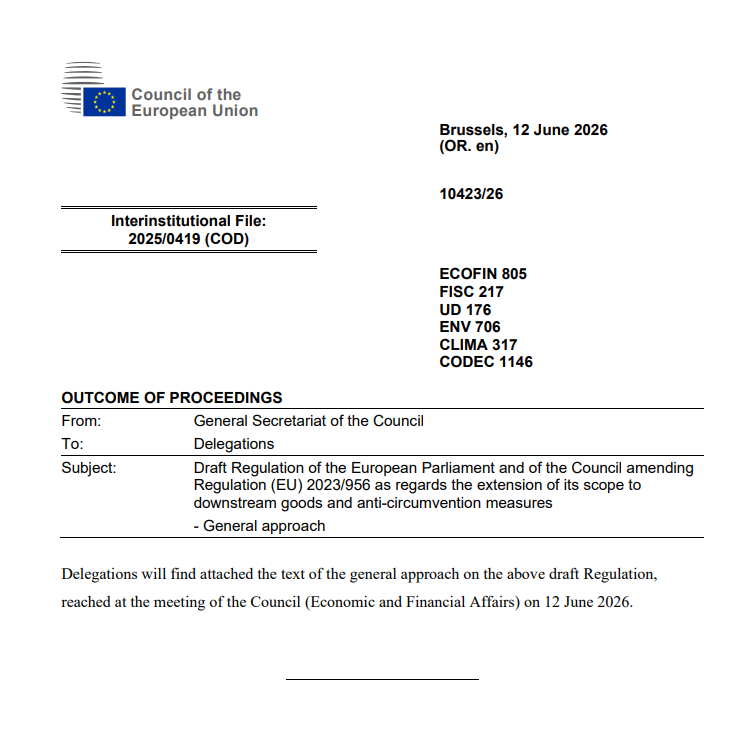
Official June 2026 document from the Council of the European Union
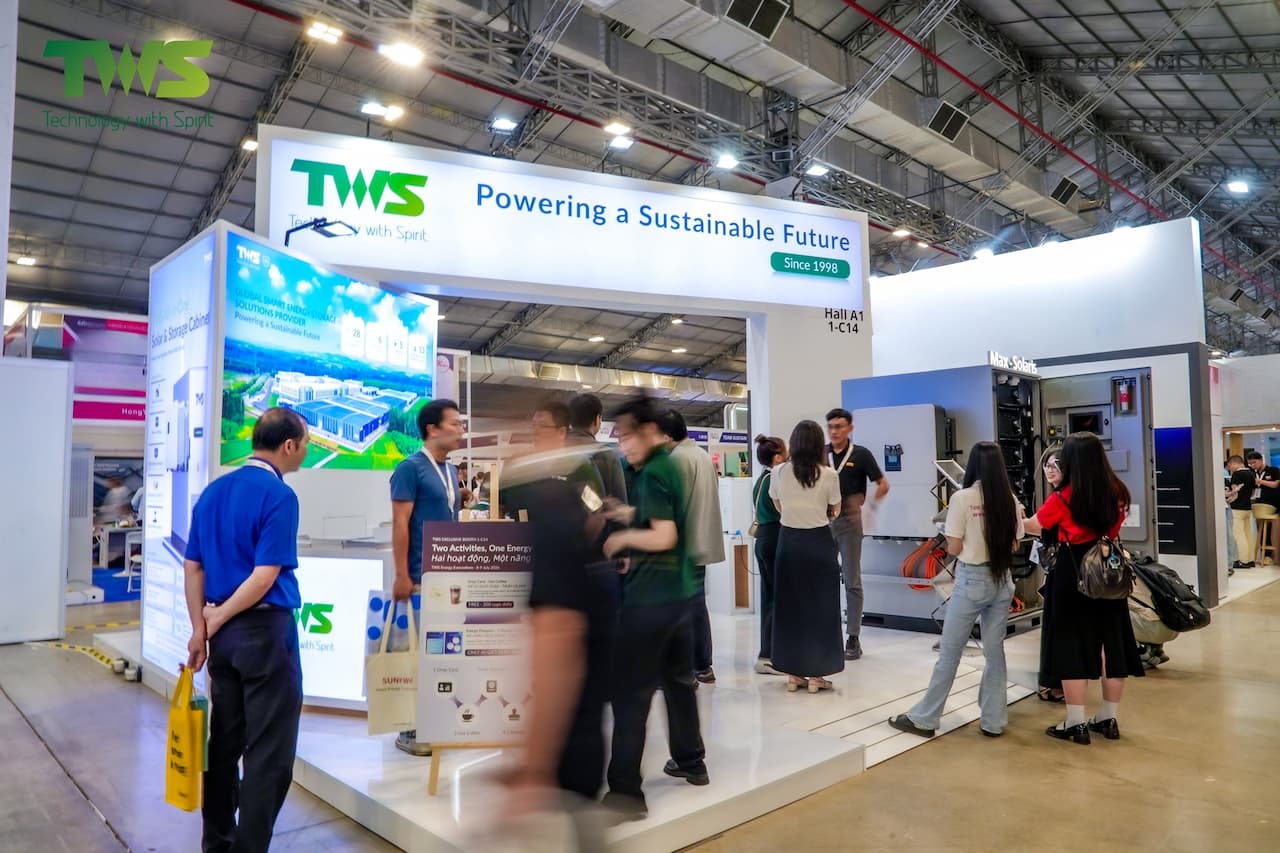
First-hand market intelligence in action: The bustling TWS ESS booth at Solar & Storage Live Vietnam 2026 on July 8
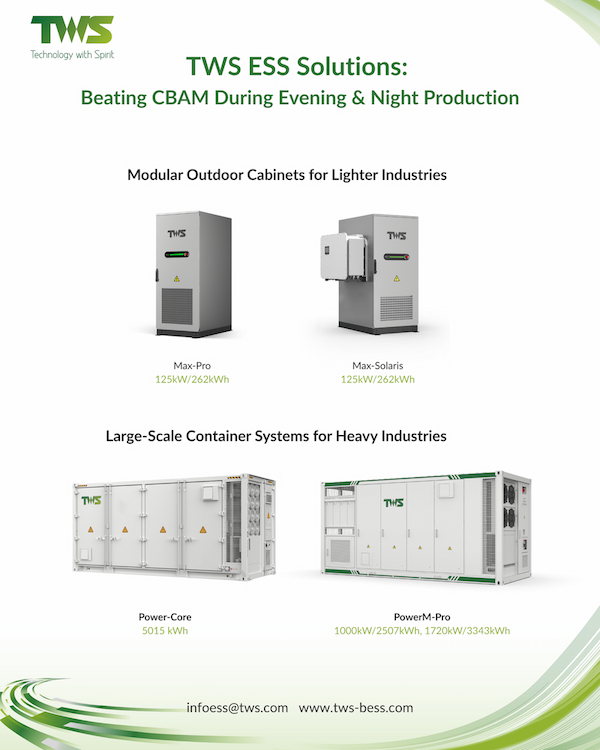
TWS ESS solutions for CBAM compliance: Supporting evening and night production for lighter and heavy industries.
Significant adjustments have emerged in both local utility electricity frameworks and international carbon border pricing metrics, dictating a strategic pivot toward advanced Battery Energy Storage Systems (BESS) engineered by providers like TWS Technology to secure production continuity.
The Restructuring of Vietnam's Time-of-Use Electricity Framework
Industrial operations within Vietnam face a reorganized operational landscape under the Ministry of Industry and Trade’s Decision No. 963/QD-BCT. The regulation fundamentally restructures the national Time-of-Use (TOU) pricing framework:
• Previous Framework: The historical structure utilized two separate peak-rate windows per day, enabling energy storage assets to execute two arbitrage cycles daily.
• Revised Framework: The updated policy institutes a single, continuous five-hour evening peak block from 17:30 to 22:30, active Monday through Saturday.
While this structural compression unfavourably limits standard financial models to a single arbitrage cycle per day, technical evaluations by TWS Technology indicate that yet new opportunities arise in the industrial sector due to the EU’s regulatory changes.
Understanding CBAM: Why European Climate Policy Mandates Global Compliance
For manufacturing plants in Vietnam and other parts of the world, the European Union's Carbon Border Adjustment Mechanism (CBAM) represents a major shift in international trade standards. Historically, factories operating in developing markets were not bound by the strict emissions caps and high carbon taxes imposed on manufacturers based within the EU. This cost difference created carbon leakage—where production simply migrated to regions with looser environmental laws to keep costs low.
To eliminate this imbalance, CBAM functions as an import carbon adjustment fee designed to equalize the carbon price paid by domestic European manufacturers under the EU Emissions Trading System (ETS) and their international competitors. Under the definitive phase that commenced on January 1, 2026, European importers must purchase digital CBAM certificates corresponding to the exact volume of greenhouse gases embedded in the goods they import.
Because the financial liability rests on the EU importer, these buyers are legally forced to demand verified, granular emissions data from their overseas suppliers. Consequently, the carbon footprint of an offshore factory has transformed from an environmental metric into a hard commercial pricing factor.
Why Standard Grid Power Fails Verification and How BESS Resolves the Bottleneck
Standard utility grid electricity presents severe compliance challenges under the CBAM verification framework. Because most national grids mix renewable generation with fossil fuels, the resulting carbon footprint is mixed and cannot be verified as 100% clean. To qualify for lower carbon tariffs, manufacturers are encouraged to prove a direct, traceable connection to green power—meaning energy is preferred to be generated on-site or via a dedicated, directly connected renewable resource.
This creates a critical operational bottleneck. Many exporters, especially those with continuous production procedures, frequently operate in evenings and at night, coinciding precisely with the drop in daytime solar generation. Consequently, industrial integrated BESS configurations have become critical. A BESS captures surplus daytime solar energy and stores it for direct deployment during night operations, establishing a continuous, fully auditable stream of green power that shields exported products from punitive carbon levies.
Accelerated Legislative Timeline and Strict Anti-Circumvention
Regulatory developments in mid-2026 indicate a rapid tightening of compliance timelines. In July 2026, the European Parliament’s Environment Committee (ENVI) voted 56 to 11 to adopt a rigorous stance on CBAM enforcement. Coupled with the EU Council’s General Approach agreement finalized on June 12, 2026, major political barriers have been cleared, solidifying the long-term enforcement path of the expanded tax mechanism.
The legislative mandate introduces strict anti-circumvention measures designed to intercept global supply chain maneuvers. The European Commission will actively monitor international trade patterns, retaining the power to enforce penalties within a three-month window if new evasion configurations are identified. Industrial operations are explicitly required to avoid the following practices:
• Slight Processing: Introducing minor physical or chemical alterations to a product for the sole purpose of changing customs codes to bypass CBAM tracking.
• Resource Shuffling: Directing clean energy assets exclusively toward EU-destined production lines while powering remaining operations with unmitigated grid electricity.
• Parcel Fragmentation: Dividing bulk industrial orders into small batches or separate online shipments to drop below minimum weight thresholds.
• Supply Chain Shifting: Routing goods through intermediate jurisdictions to alter the documented country of origin on customs paperwork.
Target Scope and Intended Expansion
The mechanism is actively deployed across six foundational base material categories, with an expanded downstream footprint scheduled for implementation [2]:
Active Sectors (Current Phase):
1. Cement: Clinker and process emissions.
2. Iron and Steel: Primary iron, tubes, pipes.
3. Aluminium: Unwrought forms and alloys.
4. Fertilisers: Ammonia, nitric acid.
5. Electricity: Direct grid imports.
6. Hydrogen: Compressed and uncompressed forms.
Expanded Sectors (2028 Mandate - Voted July 2026) [2]:
A total of 180 downstream product codes containing steel or aluminum will face active tariffs, including industrial hardware, machinery, automotive components, consumer home appliances, and heavy construction equipment.
Financial Impact Analysis of CBAM: Case Study on Fastener Manufacturing
While the cost differences of CBAM vary from product to product across different regions, TWS Technology presents this example to help stakeholders gain a better understanding of the financial risks of ignoring CBAM versus the economic returns of adopting BESS-enabled green power.
According to the European Fastener Distributor Association (EFDA), exporting standard steel fasteners from production hubs in countries like Vietnam without certified green energy documentation incurs a default punitive tariff of €135.61 per ton [4]. This penalty alters the cost structure of factory operations:
• Punitive EU CBAM Carbon Tax (No Action): €135.61 / ton [4]
• Baseline Factory Electricity Cost: €67.42 / ton [5]
The Net Financial Impact:
Given that producing one ton of steel components requires roughly €67.42 in raw electricity costs [5], the carbon penalty represents approximately double the baseline power expenditures. This penalty adds roughly 10% to total operational expenditures (OpEx), instantly eroding the factory's competitive edge in the global market.
How BESS + Renewables Saves Massively on CBAM Costs
By integrating on-site solar PV arrays with high-capacity BESS setups, manufacturers can transition away from high-carbon grid power during peak production hours.
• Compliant CBAM Carbon Tax (BESS Enabled): €51.84 / ton [4]
• Net Cost Savings: €83.77 / ton [4]
By lowering the calculated CBAM liability from €135.61 down to €51.84 per ton, compliant factories secure an immediate €83.77 per ton pricing advantage over competitors relying entirely on unmitigated grid power [4]. This case study demonstrates that advanced energy storage is no longer just an infrastructure cost, but a direct tool for operational cost reduction.
The Strategic Reality: Market Exclusion and Long-Term Revenue Loss
Beyond immediate carbon tariffs, the overarching threat of non-compliance is complete exclusion from European supply chains. EU buyers facing strict statutory mandates must systematically drop uncertified suppliers to protect their own compliance records. For global factories, this lockout results in a permanent loss of high-value market share, cutting off key income streams and forcing them into lower-margin regional markets where competition is fiercer.
Industrial Energy Storage Solutions Portfolio
To address these evolving operational requirements, TWS Technology ESS manufactures a specialized suite of scalable energy storage assets tailored to diverse commercial configurations:
Modular Energy Storage Cabinets:
Engineered for light industrial spaces requiring compact installations.
• The TWS Max-Pro (125 kW / 262 kWh) handles demand charge management and intensive peak shaving.
• The TWS Max-Solaris (125 kW / 262 kWh) incorporates a native DC-coupled design to optimize solar-to-battery conversion efficiencies.
Large-Scale Containerized Systems:
Optimized for heavy industrial loads and structural grid expansion limits.
• The PowerM-Pro (available in 1000 kW / 2507 kWh and 1720 kW / 3343 kWh configurations) provides critical factory power stabilization.
• The PowerCore (5015 kWh) acts as an ultra-high capacity containerized solution designed for massive green energy storage deployment.
Operational Track Record and Heavy Industry Deployment
The deployment history of TWS Technology ESS spans multiple key industrial references across Vietnam and broader heavy industrial sectors:
Vietnam Implementations:
• Hanoi (Water Purification): A 125 kW / 262 kWh TWS Max-Pro system manages automated peak-shifting to control costs and protect manufacturing infrastructure from low-hydropower grid volatility.
• Quang Ninh (Municipal Infrastructure): A 125 kW / 262 kWh TWS Max-Solaris system leverages a DC-coupled architecture to integrate public infrastructure directly with rooftop solar.
• Hanoi (Industrial Expansion): Scalable TWS MU units furnish immediate backup and supplementary power, enabling facility expansion without the capital delays associated with substation transformer upgrades.
Heavy Industrial Track Record:
East China (Steel Manufacturing):
• A 123 MWh large-scale installation delivers millisecond-level backup power, frequency regulation, and structural peak shaving for continuous mill operations.
Jiangsu, China (Industrial Cost Control):
• A 225 MW / 450 MWh energy storage facility provides large-scale off-peak energy management for heavy industrial manufacturing.
Conclusion
For manufacturing exporters seeking to preserve secure market access to the European Union, the integration of dedicated energy storage represents a necessary mechanism for long-term economic stability and margin protection. The 2026–2027 regulatory window provides a distinct timeline for industrial facilities to update power architectures before expanded downstream penalties apply.
Media & Project Inquiries:
TWS Technology ESS
Email: infoess@tws.com
Website: https://tws-bess.com/
References:
[1] EU Parliament vote on CBAM enforcement. https://www.europarl.europa.eu/news/en/press-room/20260629IPR46212/meps-strengthen-the-eu-s-carbon-border-adjustment-mechanism-and-close-loopholes
[2] ESG Today report on CBAM product list expansion. https://www.esgtoday.com/eu-lawmakers-vote-to-expand-list-of-products-under-cbam-carbon-import-tax/
[3] EU Council agreement on CBAM approach. https://www.consilium.europa.eu/en/press/press-releases/2026/06/12/council-moves-to-strengthen-the-eu-s-carbon-border-adjustment-mechanism/
[4] EFDA report on fastener carbon tax calculations. https://www.nfda-fastener.org/assets/docs/EFDA-CBAMcostscalculationin2026.pdf
[5] IMARC model on steel bolt manufacturing costs. https://www.imarcgroup.com/insight/steel-bolts-fasteners-cost-model
Lydia Cui
TWS Technology Limited
+852 9568 3586
lydia.cui@tws.com
Visit us on social media:
LinkedIn
Instagram
Facebook
YouTube
TikTok
Legal Disclaimer:
EIN Presswire provides this news content "as is" without warranty of any kind. We do not accept any responsibility or liability for the accuracy, content, images, videos, licenses, completeness, legality, or reliability of the information contained in this article. If you have any complaints or copyright issues related to this article, kindly contact the author above.
