

Airport Automation Market to Reach USD 9.825 Billion by 2032, Growing at a CAGR of 5.30% Driven by Rising Air Traffic
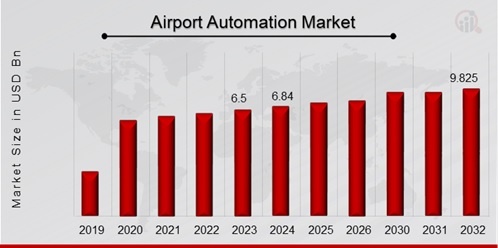
Airport Automation Market
Airport Automation Market, By System, By Technology, By Level of Automation, By End-user, By Regional
NEW YORK, NY, UNITED STATES, March 13, 2025 /EINPresswire.com/ -- The global Airport Automation Market is experiencing significant growth as the aviation industry continues to adopt advanced technologies to enhance efficiency, safety, and passenger experience. With the increasing demand for seamless operations in airports, automation solutions are rapidly transforming both the front-end and back-end operations of the aviation ecosystem. The market is set to grow substantially, driven by factors such as the need for streamlined processes, reduced human intervention, enhanced security, and growing passenger numbers worldwide. This comprehensive market research report provides an in-depth analysis of the airport automation landscape, highlighting key market segments, technologies, and trends across different regions, including North America, Europe, Asia-Pacific, and the Rest of the World, with a forecast extending through to 2032.The airport automation market is segmented by system type, technology, level of automation, application, end-user, and region, each contributing to the overall growth and evolution of the industry. These segments collectively present a detailed overview of how automation is reshaping airport operations and where future investments will be most beneficial.
𝐊𝐞𝐲 𝐏𝐥𝐚𝐲𝐞𝐫𝐬
ABB, Collins Aerospace, Amadeus IT Group, Honeywell, IBM Corporation, L3Harris Technologies, Leidos Holdings, Inc., Daifuku Co. Ltd., Siemens, Thales Group.
𝐅𝐫𝐞𝐞 𝐒𝐚𝐦𝐩𝐥𝐞 𝐂𝐨𝐩𝐲" - 𝐀𝐜𝐜𝐞𝐬𝐬 𝐚 𝐜𝐨𝐦𝐩𝐥𝐢𝐦𝐞𝐧𝐭𝐚𝐫𝐲 𝐜𝐨𝐩𝐲 𝐨𝐟 𝐨𝐮𝐫 𝐫𝐞𝐩𝐨𝐫𝐭 𝐭𝐨 𝐞𝐱𝐩𝐥𝐨𝐫𝐞 𝐢𝐭𝐬 𝐜𝐨𝐧𝐭𝐞𝐧𝐭 𝐚𝐧𝐝 𝐢𝐧𝐬𝐢𝐠𝐡𝐭𝐬:
https://www.marketresearchfuture.com/sample_request/21981
𝐁𝐲 𝐒𝐲𝐬𝐭𝐞𝐦 𝐓𝐲𝐩𝐞
The system type segment includes data storage, automation & control, data acquisition & communication, and software & solutions. These systems play a crucial role in modernizing airport operations. Data storage systems are integral to managing large volumes of data generated by passengers, baggage handling systems, and security processes. Automation & control systems ensure that airport processes are streamlined and efficiently managed, from baggage handling to passenger processing. Data acquisition & communication systems enable real-time monitoring and communication between various airport departments, ensuring that potential disruptions are minimized. Software & solutions are pivotal in the integration of these systems and enable advanced decision-making, predictive analysis, and enhanced resource management.
𝐁𝐲 𝐓𝐞𝐜𝐡𝐧𝐨𝐥𝐨𝐠𝐲
Technological advancements in airport automation are categorized into several key domains. Baggage handling systems represent a major area of focus, automating the process of baggage check-in, sorting, and delivery. These systems reduce human error, enhance the speed of operations, and improve the overall passenger experience. Passenger processing technology, including self-check-in kiosks, biometric recognition, and automated boarding, helps reduce wait times and improve overall flow efficiency. Air traffic management (ATM) automation is revolutionizing how air traffic controllers monitor and guide aircraft, utilizing advanced technologies for real-time data analysis and seamless communication. The adoption of Information Technology (IT) solutions in airports has streamlined various processes, including data management, communication, and overall operations management. Security systems are another critical area of automation, leveraging technologies such as biometric scanning, AI-driven surveillance, and automated screening to enhance safety while reducing the burden on human staff. Automated ground handling systems, including automatic tugs and robotic systems for aircraft servicing, ensure faster turnaround times, reduce human labor requirements, and increase efficiency in the ground operations sector.
𝐁𝐲 𝐋𝐞𝐯𝐞𝐥 𝐨𝐟 𝐀𝐮𝐭𝐨𝐦𝐚𝐭𝐢𝐨𝐧
The market for airport automation can also be classified according to the level of automation (LoA), with levels ranging from Level 1 to Level 4. Level 1 automation refers to systems that provide basic assistance, requiring human intervention for the decision-making process. Level 2 involves more advanced automation, where systems assist but humans still oversee and control operations. Level 3 is characterized by high levels of automation, where systems can operate independently, but human intervention is still possible in case of emergencies or anomalies. Level 4 represents full automation, where systems operate autonomously with minimal human interaction, offering the highest level of efficiency, safety, and control. As airports move towards higher levels of automation, they are seeing greater reductions in operational costs, faster processing times, and an overall improvement in service delivery.
"𝐁𝐮𝐲 𝐍𝐨𝐰" - 𝐓𝐚𝐤𝐞 𝐢𝐦𝐦𝐞𝐝𝐢𝐚𝐭𝐞 𝐚𝐜𝐭𝐢𝐨𝐧 𝐭𝐨 𝐩𝐮𝐫𝐜𝐡𝐚𝐬𝐞 𝐭𝐡𝐞 𝐟𝐮𝐥𝐥 𝐫𝐞𝐩𝐨𝐫𝐭 𝐚𝐧𝐝 𝐚𝐜𝐜𝐞𝐬𝐬 𝐚𝐥𝐥 𝐭𝐡𝐞 𝐯𝐚𝐥𝐮𝐚𝐛𝐥𝐞 𝐢𝐧𝐟𝐨𝐫𝐦𝐚𝐭𝐢𝐨𝐧 𝐢𝐭 𝐜𝐨𝐧𝐭𝐚𝐢𝐧𝐬:
https://www.marketresearchfuture.com/checkout?currency=one_user-USD&report_id=21981
𝐁𝐲 𝐀𝐩𝐩𝐥𝐢𝐜𝐚𝐭𝐢𝐨𝐧
The application of airport automation is categorized into terminal-side operations, airside operations, and landside operations. Terminal-side operations include passenger check-in, baggage handling, security screening, and boarding processes, all of which benefit significantly from automation technologies. Automated kiosks, biometric systems, and robotic systems are increasingly being deployed to enhance the efficiency and accuracy of these processes. Airside operations, including aircraft maintenance, refueling, and pushback, are also experiencing a shift toward automation. Automated ground handling systems are improving turnaround times, enhancing safety, and reducing manual labor. Landside operations encompass activities such as check-in services, parking management, and transportation systems. Automated solutions, such as self-check-in kiosks and smart parking systems, contribute to the overall seamless experience for passengers before they enter the terminal.
𝐁𝐲 𝐄𝐧𝐝-𝐔𝐬𝐞𝐫
The end-user segment of the airport automation market includes commercial airports, military airports, and cargo airports. Commercial airports are the largest contributors to the market, driven by increasing passenger traffic and the demand for improved operational efficiency. Airports worldwide are adopting automation technologies to handle growing passenger numbers, reduce congestion, and improve safety and security. Military airports also play a significant role, particularly in areas requiring specialized security measures and control systems. The demand for automated systems in military airports is rising due to the need for more precise, efficient, and secure operations. Cargo airports are another key market, as automation can help streamline freight processing, reduce handling times, and improve tracking and inventory management. Automation systems are particularly important in the logistics sector to ensure timely and accurate handling of cargo.
"𝐁𝐫𝐨𝐰𝐬𝐞 𝐑𝐞𝐩𝐨𝐫𝐭" - 𝐄𝐱𝐩𝐥𝐨𝐫𝐞 𝐭𝐡𝐞 𝐫𝐞𝐩𝐨𝐫𝐭'𝐬 𝐜𝐨𝐧𝐭𝐞𝐧𝐭𝐬, 𝐬𝐞𝐜𝐭𝐢𝐨𝐧𝐬, 𝐚𝐧𝐝 𝐤𝐞𝐲 𝐢𝐧𝐬𝐢𝐠𝐡𝐭𝐬 𝐛𝐲 𝐛𝐫𝐨𝐰𝐬𝐢𝐧𝐠 𝐭𝐡𝐫𝐨𝐮𝐠𝐡 𝐢𝐭𝐬 𝐝𝐞𝐭𝐚𝐢𝐥𝐞𝐝 𝐢𝐧𝐟𝐨𝐫𝐦𝐚𝐭𝐢𝐨𝐧
https://www.marketresearchfuture.com/checkout?currency=one_user-USD&report_id=21981
𝐁𝐲 𝐑𝐞𝐠𝐢𝐨𝐧
The airport automation market is geographically divided into North America, Europe, Asia-Pacific, and the Rest of the World. Each region is experiencing distinct trends and challenges in adopting airport automation technologies.
In North America, the demand for automation solutions is driven by the need to improve efficiency and enhance the passenger experience at major airports. The region is home to some of the world’s busiest airports, and automation technologies are being deployed to reduce delays and enhance operational capabilities. Europe has a strong presence in airport automation, with countries such as the UK, Germany, and France leading the way in the implementation of innovative technologies. The European market is heavily focused on enhancing security and improving passenger processing through automation. Asia-Pacific is expected to witness significant growth due to the region’s rapidly expanding aviation sector, particularly in countries like China, India, and Japan. The increasing number of air passengers and the growing emphasis on smart cities are expected to drive investments in airport automation solutions. The Rest of the World is also showing promise, with increasing demand for automated systems in emerging economies and regions, especially in the Middle East and Latin America, as airport infrastructure continues to develop.
𝐌𝐚𝐫𝐤𝐞𝐭 𝐅𝐨𝐫𝐞𝐜𝐚𝐬𝐭
The airport automation market is projected to experience substantial growth over the forecast period, with a compound annual growth rate (CAGR) expected to continue gaining momentum through 2032. The adoption of AI, IoT, and data analytics is expected to play a pivotal role in shaping the future of airport operations. As passenger volumes grow and airports strive to enhance efficiency, automation technologies will become an essential part of daily operations. Additionally, the increasing demand for contactless solutions in the wake of the COVID-19 pandemic is expected to accelerate the pace of adoption, particularly in passenger processing, baggage handling, and security systems.
𝐓𝐀𝐁𝐋𝐄 𝐎𝐅 𝐂𝐎𝐍𝐓𝐄𝐍𝐓𝐒
1. Executive Summary
2. Market Introduction
3. Research Methodology
4. Market Dynamics
5. Market Factor Analysis
6. Airport Automation Market, By Court Surface (Usd Billion)
7. Airport Automation Market, By Player Type Level (Usd Billion)
8. Airport Automation Market, By Activity Type (Usd Billion)…….
𝐃𝐢𝐬𝐜𝐨𝐯𝐞𝐫 𝐌𝐨𝐫𝐞 𝐑𝐞𝐬𝐞𝐚𝐫𝐜𝐡 𝐑𝐞𝐩𝐨𝐫𝐭𝐬 𝐨𝐧 𝐀𝐞𝐫𝐨𝐬𝐩𝐚𝐜𝐞 𝐚𝐧𝐝 𝐃é𝐟𝐞𝐧𝐬𝐞 𝐈𝐧𝐝𝐮𝐬𝐭𝐫𝐲 𝐛𝐲 𝐌𝐚𝐫𝐤𝐞𝐭 𝐑𝐞𝐬𝐞𝐚𝐫𝐜𝐡 𝐅𝐮𝐭𝐮𝐫𝐞:
𝐀𝐢𝐫𝐜𝐫𝐚𝐟𝐭 𝐄𝐥𝐞𝐯𝐚𝐭𝐨𝐫 𝐌𝐚𝐫𝐤𝐞𝐭
https://www.marketresearchfuture.com/reports/aircraft-elevator-market-33996
𝐀𝐢𝐫𝐜𝐫𝐚𝐟𝐭 𝐄𝐧𝐠𝐢𝐧𝐞 𝐓𝐞𝐬𝐭𝐛𝐞𝐝 𝐌𝐚𝐫𝐤𝐞𝐭
https://www.marketresearchfuture.com/reports/aircraft-engine-testbed-market-33804
𝐀𝐢𝐫𝐜𝐫𝐚𝐟𝐭 𝐇𝐞𝐚𝐭 𝐄𝐱𝐜𝐡𝐚𝐧𝐠𝐞𝐫 𝐌𝐚𝐫𝐤𝐞𝐭
https://www.marketresearchfuture.com/reports/aircraft-heat-exchanger-market-22819
𝐀𝐢𝐫𝐜𝐫𝐚𝐟𝐭 𝐋𝐚𝐧𝐝𝐢𝐧𝐠 𝐆𝐞𝐚𝐫 𝐒𝐲𝐬𝐭𝐞𝐦𝐬 𝐌𝐚𝐫𝐤𝐞𝐭
https://www.marketresearchfuture.com/reports/aircraft-landing-gear-systems-market-42319
𝐀𝐢𝐫𝐜𝐫𝐚𝐟𝐭 𝐋𝐚𝐯𝐚𝐭𝐨𝐫𝐲 𝐒𝐲𝐬𝐭𝐞𝐦 𝐌𝐚𝐫𝐤𝐞𝐭
https://www.marketresearchfuture.com/reports/aircraft-lavatory-system-market-23762
𝐀𝐛𝐨𝐮𝐭 𝐌𝐚𝐫𝐤𝐞𝐭 𝐑𝐞𝐬𝐞𝐚𝐫𝐜𝐡 𝐅𝐮𝐭𝐮𝐫𝐞:
Market Research Future (MRFR) is a global market research company that takes pride in its services, offering a complete and accurate analysis with regard to diverse markets and consumers worldwide. Market Research Future has the distinguished objective of providing optimal quality research and granular research to clients. Our market research studies by products, services, technologies, applications, end users, and market players for global, regional, and country level market segments, enable our clients to see more, know more, and do more, which help answer your most important questions.
𝐂𝐨𝐧𝐭𝐚𝐜𝐭 𝐔𝐬:
Market Research Future (Part of Wantstats Research and Media Private Limited)
99 Hudson Street, 5Th Floor
New York, NY 10013
United States of America
+1 628 258 0071 (US)
+44 2035 002 764 (UK)
𝐄𝐦𝐚𝐢𝐥: sales@marketresearchfuture.com
𝐖𝐞𝐛𝐬𝐢𝐭𝐞: https://www.marketresearchfuture.com
Market Research Future
Market Research Future
+1 855-661-4441
email us here
Visit us on social media:
Facebook
X
LinkedIn
Legal Disclaimer:
EIN Presswire provides this news content "as is" without warranty of any kind. We do not accept any responsibility or liability for the accuracy, content, images, videos, licenses, completeness, legality, or reliability of the information contained in this article. If you have any complaints or copyright issues related to this article, kindly contact the author above.
